Statistical Foundations for Neuroscience
From Data to Discovery
- Oct 24 – Nov 7
- 3 weeks · 3 live sessions
- Saturday · 6:00 PM
Live workshops and structured courses on Neuroscience and Neurotechnology.
BrowseFrom Data to Discovery
Live Sunday-evening sessions · foundations → architectures → theory → applications
Self-paced video courses, plus instructor-led evening cohorts on the NeuroAI track.
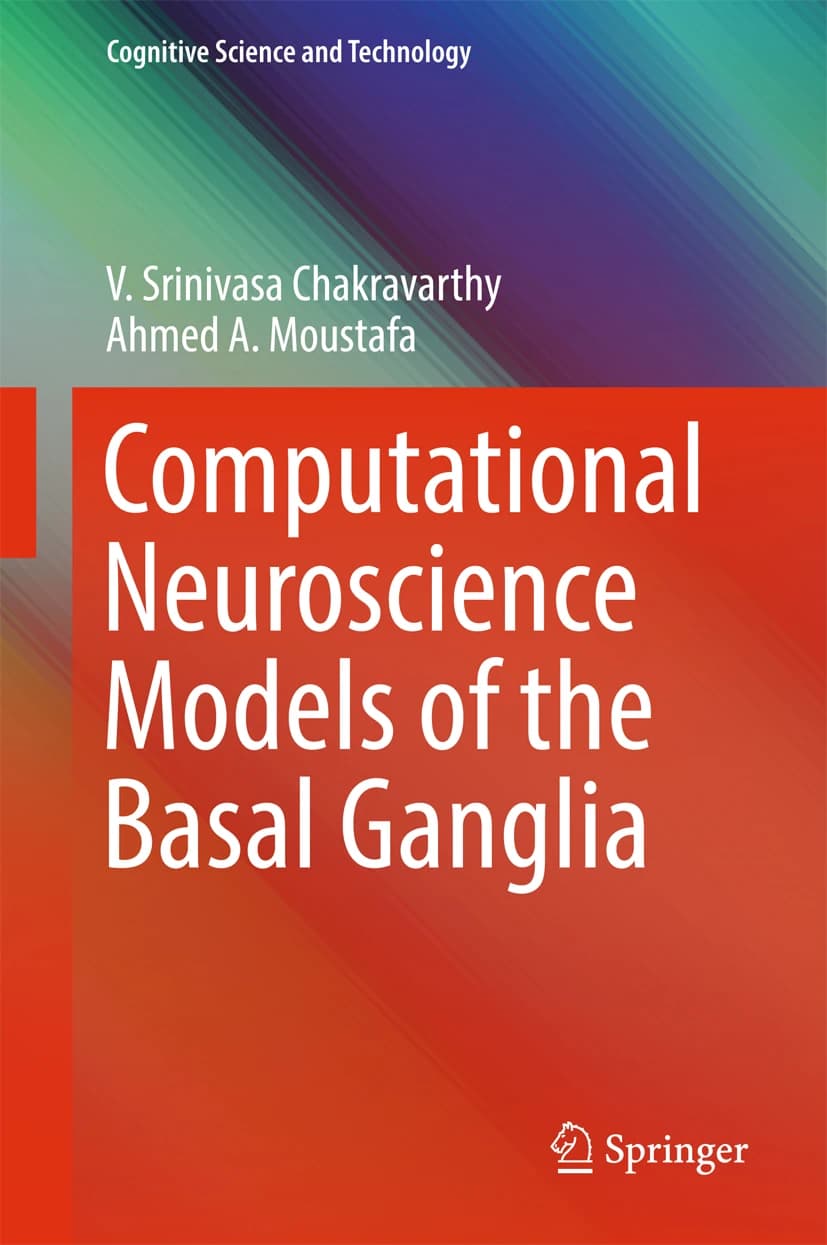
9 self-paced · 2 live cohortsExplore coursesFrom the history of brain discovery to computational models of the basal ganglia.
6 books · 2 on SpringerBrowse booksMentored programmes and schools where you model, experiment and present real research.
3 programmes · 1 running nowSee workshopsIntroduction to EEG and Artificial Intelligence is a beginner-friendly microcourse that introduces the fundamentals of EEG, brain signal processing, and AI-driven analysis techniques.
The course then introduces the grammar of data, focusing on how biological observations can be represented using mathematical structures such as vectors, matrices, and functions.
Understand the language of dynamical systems. Analyze nonlinear dynamics and emergent behaviors and build neural models from single Neurons to populations.
Neural signal processing is the discipline of capturing the brain's electrical activity, removing what does not belong in it, and extracting information that can be interpreted or acted on.
Introduction to EEG and Artificial Intelligence
A 60-minute microcourse covering how neurotechnology records, decodes, and modulates activity in the nervous system — from EEG and brain imaging to brain-computer interfaces and neuromodulation.
Explore the fascinating world of human movement—from motion capture and biomechanics to feature extraction and Artificial Intelligence—and discover how movement becomes meaningful data.
This course presents that discipline systematically across ten chapters, from the bioelectric origin of a neural signal through to the clinical, consumer and ethical questions the field faces today
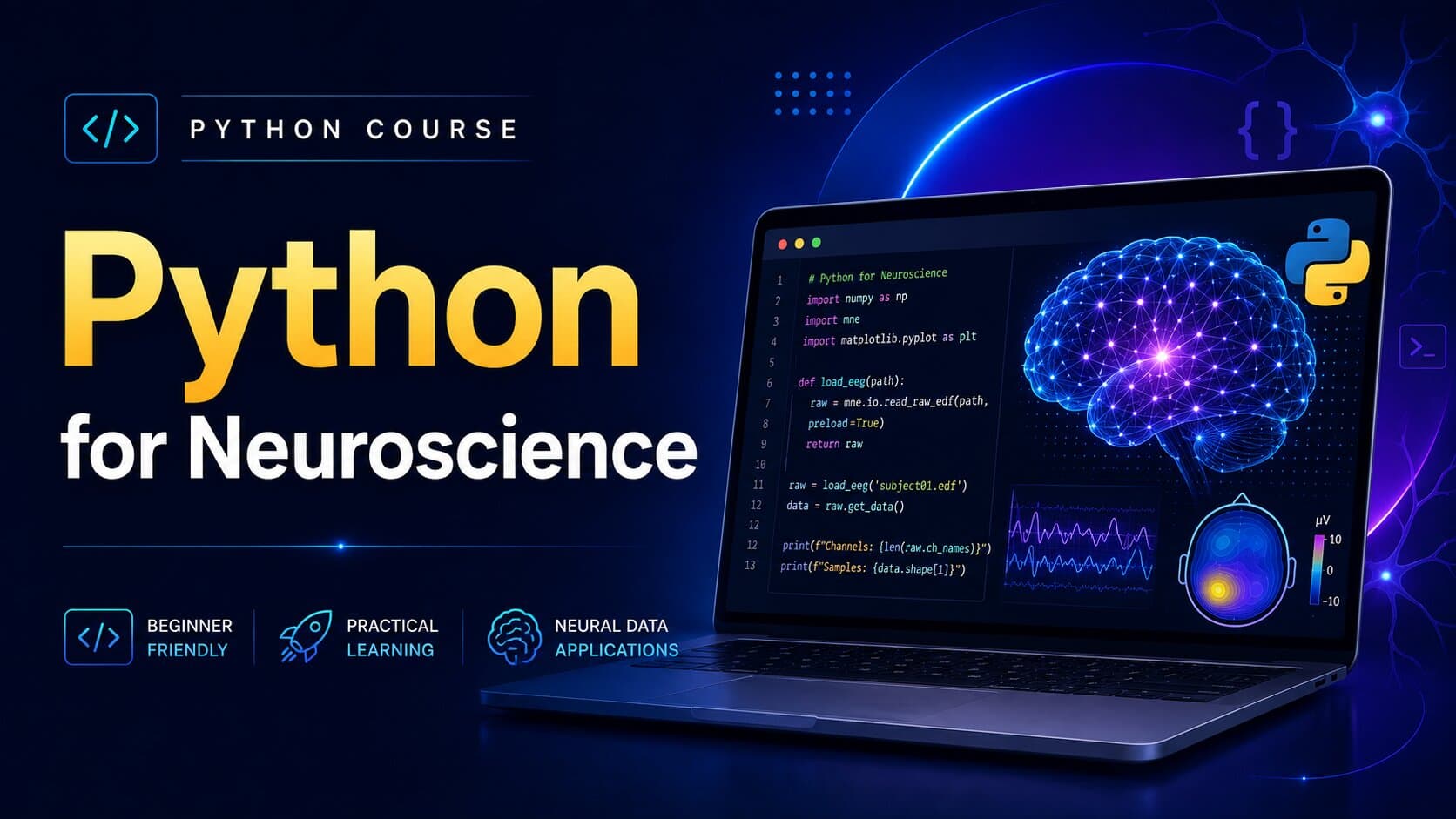
This micro-course introduces the fundamental concepts of Python programming with a focus on scientific computing and neuroscience-oriented applications.
New
New
New
Springer
Springer
FreeThis microcourse provided a clear and engaging introduction to EEG and its connection with Artificial Intelligence. The concepts were explained in a structured manner, making it easy to understand the complete EEG analysis workflow.
An excellent starting point for anyone interested in neuroscience and AI. The course offers a concise overview of EEG signal processing and modern AI techniques, making complex topics accessible to beginners.
The Python for Neuroscience course finally made analysing my lab's recordings feel approachable — short lessons, practical notebooks.
The Neural Oscillators course has been an effective refresher of all the vital concepts and thoroughly polished my understanding.