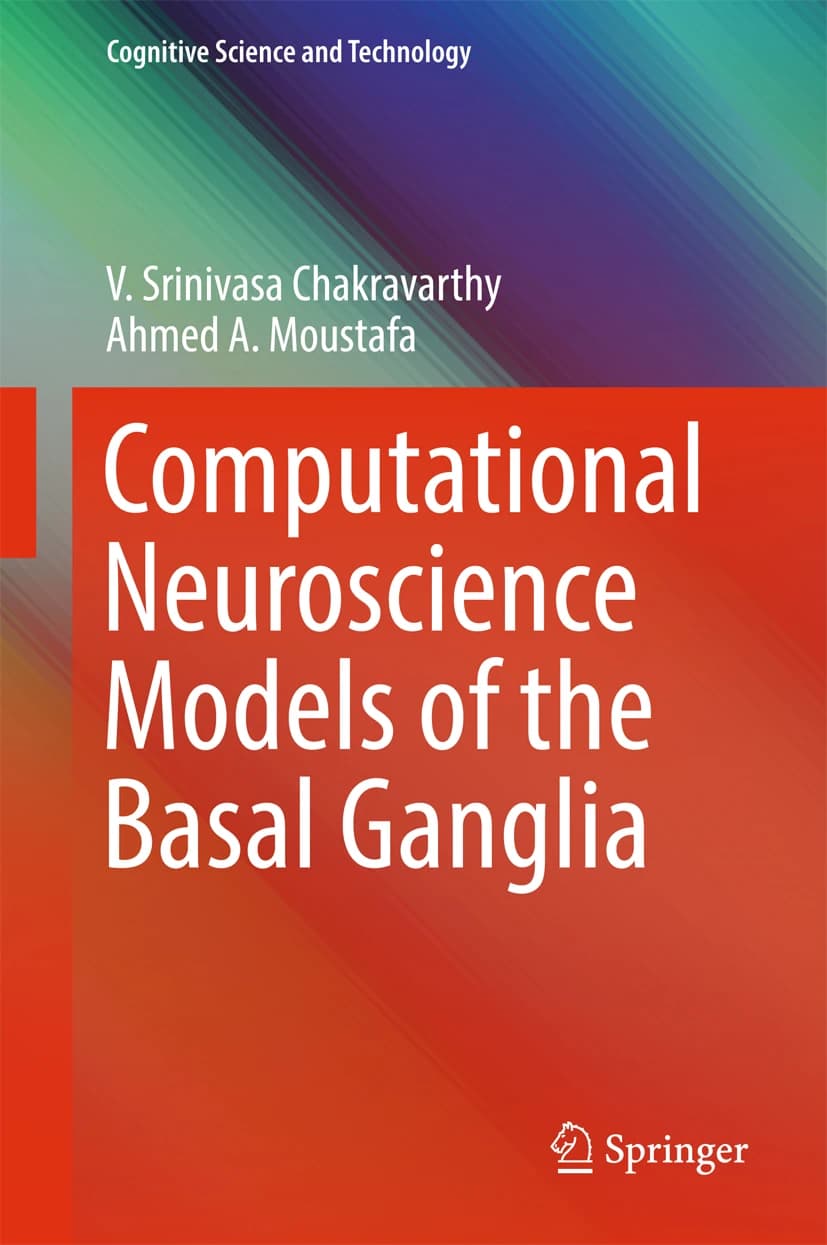
Computational Neuroscience Models of the Basal Ganglia
Cognitive Science and Technology

Prof. V. Srinivasa Chakravarthy & Dr. Ahmed A. Moustafa
IIT Madras · Western Sydney University
About the Book
This book is a comprehensive compendium of computational models of the basal ganglia, presenting the key existent theories of basal ganglia function. It covers computational models of basal ganglia-related disorders including Parkinson's disease, schizophrenia, and addiction.
The book highlights the applications of understanding the role of the basal ganglia in treating neurological and psychiatric disorders, expanding on foundational work in the field by providing a thorough overview of computational models across motor, cognitive, affective, and autonomic domains.
It caters to researchers and academics in computational cognitive neuroscience, with chapters covering dopamine, serotonin, deep brain stimulation, action selection, reinforcement learning, and oscillatory dynamics in healthy and Parkinsonian conditions.
What You'll Gain
Comprehensive model review
Exhaustively reviews empirical and theoretical work on basal ganglia function across motor, cognitive, affective, and autonomic domains.
Disorders and treatments
Covers computational models of Parkinson's disease, schizophrenia, addiction, and the effects of deep brain stimulation.
Dopamine and serotonin dynamics
Detailed treatment of neuromodulator interactions — dopamine, serotonin, and their roles in reinforcement learning and action selection.
About the Author
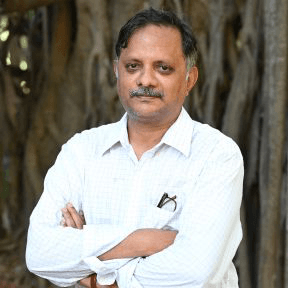
Prof. V. Srinivasa Chakravarthy & Dr. Ahmed A. Moustafa
IIT Madras · Western Sydney University
V. Srinivasa Chakravarthy obtained his PhD from the University of Texas at Austin and completed postdoctoral training at Baylor College of Medicine, Houston. He is Professor of Biotechnology at IIT Madras, with research focused on computational modelling of basal ganglia, Parkinson's Disease, and spatial cells of the hippocampus. Ahmed A. Moustafa is Senior Lecturer in Cognitive and Behavioural Neuroscience at Western Sydney University. Trained in computer science, psychology, and neuroscience, he conducts research on computational and neuropsychological studies of addiction, schizophrenia, Parkinson's disease, PTSD, and depression, with over 130 publications in high-ranking journals.
Opens on Springer · Purchase or institutional access required
- ✓ 296 pages
- ✓ Read on all devices