.png&w=96&q=75)

About the course
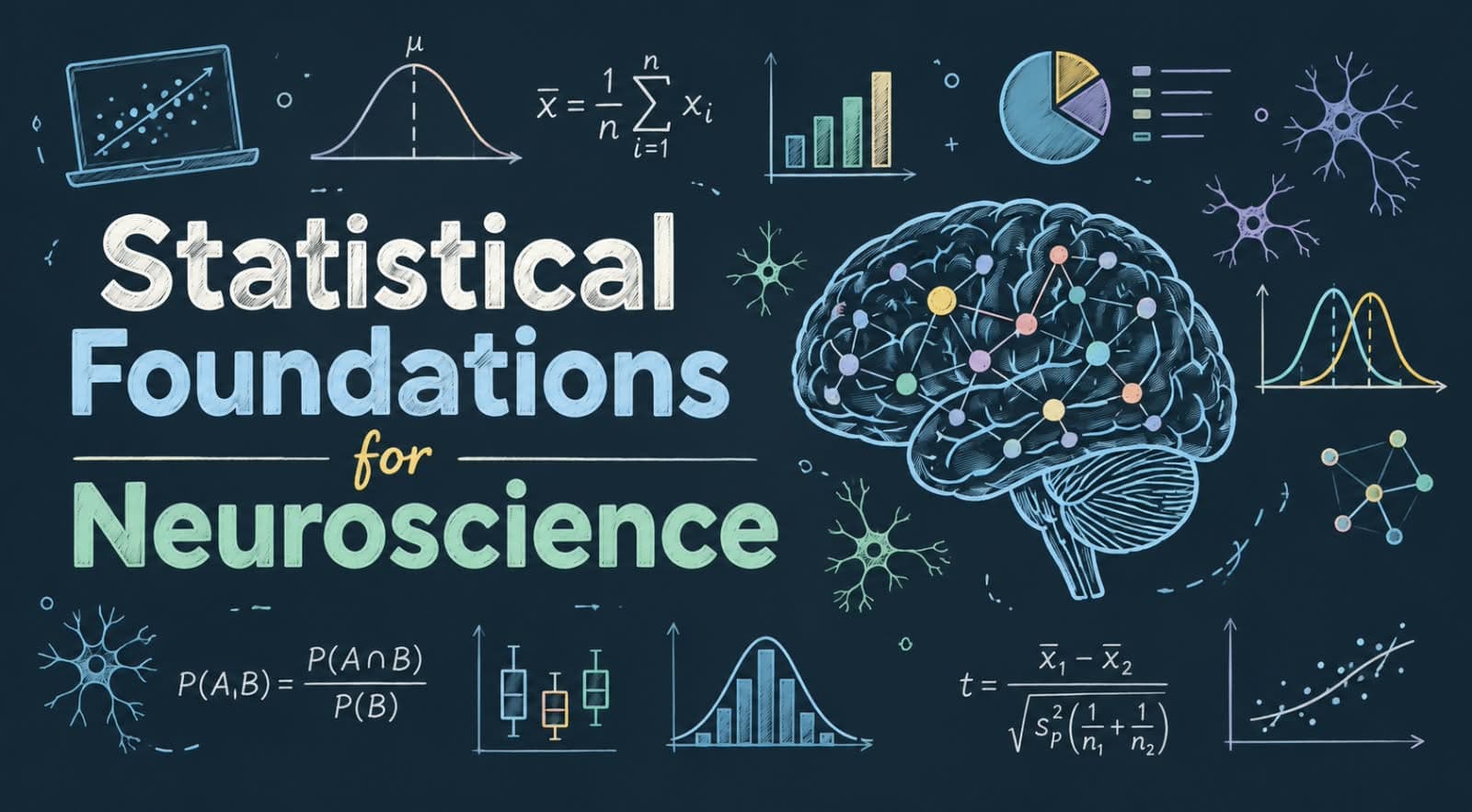
This four-hour course examines how statistical reasoning turns noisy biological measurements into trustworthy scientific claims. Moving from descriptive statistics, probability, and sampling through hypothesis testing and group comparisons to correlation and regression, it connects the logic of inference with the kinds of data neuroscientists actually collect: spike counts, neuroimaging signals, reaction times, and clinical scores.
The course uses worked examples and case studies drawn from published research to show that a statistical result depends on the assumptions underlying it — from the distribution a measure follows to the chosen test and the sample size. The final module extends these ideas to relationships between variables, and to what correlation and regression can and cannot tell us about causes.
Worksheets and a short quiz follow each module to help learners consolidate key ideas. Learners who complete the course will receive a certificate of completion.